Showing posts with label Binyavanga Wainaina. Show all posts

Sunday, 1 July 2012

Emmanuel Iduma: The Parameters of Longing

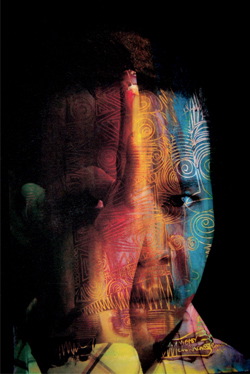
Art by Victor Ehikhamenor
I will argue for a new literary order.

Suppose we call this ‘neo-literariness’, for want of a better word, and because in hyphenation a word acquires two identities. So, neo-literariness is the word to use for a generation of writers and enthusiasts who function despite institutional lapses, and whose artistic engagement thrives of new ways of being, especially web-technology.

I will explain with a few examples.

In 2009, Dami Ajayi and myself began publishing Saraba Magazine, which to date has published 11 issues of PDF magazines, 5 poetry chapbooks and 2 sub-issues. We have, so far, received no grant, or made no profit, but we have published up to 120 writers from 5 continents. How do we manage to do this? When I am working on any new issue of Saraba, I wonder how these far-flung writers get to hear about our work. And this is more surprising because we have clearly defined our Nigerian and African sensibility. The answer is not far-fetched; something about how literature is exchanged is changing.

I think that the change that is happening is happening for two reasons – ease of accessibility and ambitiousness. The first is easy to explain. I pay about one thousand five hundred naira for weekly internet subscription. My subscription is 20 hours with a validity period of one week. I live in Lagos, which means I get 3G easily. If I lived in Umuahia, where I recently visited, I will barely struggle with EDGE. So although I know that there are exceptions, and not everyone is as privileged as I am, I understand that there increasing numbers of Nigerians on the web explains ease of accessibility, that at least, people find ways to do what they have to do online. And wasn’t it Gbenga Sesan who retweeted that Nigeria had the fourth largest internet users on earth?

But ambitiousness as an indicator of neo-literariness is a different matter. It means that our literature is changing because writers and literary enthusiasts are finding their voice on the internet, as literal as that sounds. It means that writing aside the internet, in this generation, is a failed endeavour. Even my most secluded of friends, Ayobami, has a blog. There has to be, I repeat, something happening for you online. There’s a plethora of Facebook groups, blogs, websites, that attest to a multifarious ambitiousness.

Because the first place a writer gets published, at least in my generation, at least most writers, is on a website. There are indications that more and more lit-websites will be hosted in the coming years, as we lack the structure in Africa for print journals. Saraba, although named as one of top African lit-mags, is yet to publish a print edition, if we ever will. I dare to mention the importance of this although we have equally seen how dangerous this could be – with the ease of accessibility people tend to pose as ‘critics’ without knowing the meaning of the word, or the art, the speculative erudition required. For the danger of our neo-literariness is the spontaneousness with which we can write – a tweet, a post, a comment, even before we have thought out our stance.

The other thing to point out is that the web is changing our interaction with our literariness. As I am taking examples from personal efforts and commitments, consider the work we are doing in 3bute. We are currently adapting the stories shortlisted for the Caine Prize this year. As is noted on our website, 3bute is an online anthology devoted to the contexts often missing when African stories are reported. Our mash-up platform lets artists collaborate with writers on 3-page visualizations of their stories and journalism. 3bute’s mashable surface lets everyone add their voice to the story by submitting relevant links to any context/ media content they can find on the web. 3bute pages can also be embedded all over the web, and the context everyone has added to the page goes along with it. In other words, 3bute is a social, accessible and sustainable way of distributing African stories, along with much needed context, around the web.

Imagine a redefinition of the way words intersect with imagery. The pre- neo-literariness era would not have allowed us to do this. More than ever, our generation of artists are finding ways to re-imagine how several art forms can be anthologized. I think of how words can merge with photographs and videos in one surface – how to read is to see, and thus to feel. Because our primary duty as writers, I believe, is to create a world that evokes feeling. We might achieve this through a novel, a story, a blogpost. But who says we cannot achieve this through a mash-up that allows other art-forms to interact with what is being written? There is the argument, although I do not totally buy it, that asserts that in the wake of social media came short attention spans. That this results in the necessity to keep the text shorter, to understand that more people are off the text, so to speak. The only sense this argument makes to me is the need to provide an audience with alternative ways of seeing, alternative ways of presenting a narrative.

Emmanuel Iduma
The third, and final point which I need to make about neo-literariness is emergence of artist-administrators. Although I take a cue from other art forms – inspired by the examples of Segun Adefila, Victor Ehikhamenor, Emeka Okereke, etc – I am particularly drawn to the work of writers who are engaged in creating literary structures. Nowhere is this more aptly demonstrated on the continent as in the grandeur of Kwani? which was founded by Binyavanga Wainaina. Perhaps the only writer on the continent whose Prize-winning-prestige/influence was redirected at others; and not on a seasonal basis, on a workshop-basis, but on an all-time basis.

Yet, the pattern is changing. There are emerging writers are not waiting for prize-prestige before creating a platform that projects the ambitions of others. Those like my friend Richard Ali (Sentinel Nigeria; Parresia), or Dzekashu McViban (Bakwa Magazine), Myne Whitman (Naija Stories), Tolu Oloruntoba (Klorofyl), Ayodele Olofintuade (Laipo), Morgan Oluwafemi (Artmosphere) and Temitayo Olofinlua (Bookaholic Blog). I should equally mention enthusiasts – Azafi Omoluabi-Ogosi (Parresia), Dotun Eyinade (Pulpfaction BookClub).

As such the lesson we are learning is that our neo-literariness is predicated on systems that confer ambitiousness upon the ambitions of our fellows – systems that are not necessarily founded because we are established, but because we are fixed on parameters of longing. If I have failed to mention any new literary system here, it is not because it does not exist, but because contrary to what I would ordinarily believe, hope is the new heroin – and more and more artists are attempting the needful.

More and more artists are attempting the needful.

Emmanuel Iduma obtained a degree in Law from Obafemi Awolowo University, Ile-Ife. His interests range widely, including web technology, digital art, visual art, and creative writing. He is the co-founder of Iroko Publishing, which has published Saraba as an electronic magazine since February 2009. He is currently the editor of 3bute.com, an online mashable anthology of African modernity. He participated in the Invisible Borders Trans-African Photography Initiative, a road trip from Lagos to Ethiopia. His novel, Farad, is published by Parresia Books. He is working on a second novel.

FINE BOYS, the New Novel by Eghosa Imasuen

Eghosa Imasuen, author of To Saint Patrick and Fine Boys

Eghosa Imasuen was born in Nigeria in 1976, and grew up in Warri. His first novel, To Saint Patrick, an Alternate History murder mystery about Nigeria’s civil war, was published by Farafina in 2008. His second novel, Fine Boys, is, in the words of Binyavanga Wainaina, ". . . the first African novel I know that takes us deep into the world of the children of IMF: those post-Berlin wall Africans, like myself, who came of age in the days of The Conditionalities, those imposed tools and policies that made our countries feral; the days that turned good people into beasts, the days that witnessed the great implosion and scattering of the middle classes of a whole continent. Fine Boys takes us deep into the lives of the notorious gangs that took over universities all over Nigeria in the 1990s and early this century. We saw our universities collapse, and we struggled to educate ourselves through very harsh times. It is a beautifully written novel, heartfelt, deeply knowledgeable, funny, a love story, a tragedy; an important book, a book of our times; a book for all Africans everywhere."

Buy the Kindle edition of Fine Boys here. Read reviews of the novel here and here. Read interviews with the author here and hereFine Boys is available in bookstores across Nigeria. For inquiries about the book, visit here. Published below is an excerpt from Chapter 17 of the novel. Read another excerpt here.

Excerpt from Chapter 17 of Eghosa Imasuen's Fine Boys
June 12 came and went. Very quietly. The World Cup distracted the rest of the civilized world while the Americans, who hosted the competition, changed their TV channels en masse to catch OJ Simpson trying to outrun the police at 40km/h. We kept busy watching football, not paying attention to the pressing issues that our country faced. Ken Saro Wiwa had just been arrested. 

Who heard? Who cared?

In Nigeria’s first match on the world stage we trashed the Bulgarians three-nil. Wonderful day it was. No one, not even those who maintained a fashionable aloofness when it came to football, could resist the euphoria. Banners of green-white-green, made with bed sheets or cheap plastic, flapped from the doors, boots, and bonnets of cars. We spent the evenings, as we waited for the matches to air, playing faux-match-ups between that night’s teams on our video game consoles or on the small pitch in the middle of Estate. It was the first World Cup I would actually watch.

The bloody Americans were six hours behind us and this made the match times particularly horrendous. Bleary-eyed from an evening of drinking we would stay awake until two in the morning for an 8PM match, east-coast time. Thank God, the Nigerian team was based in Boston. Eastern Time was easier to anticipate.

The armoured personnel carriers still stood at the junctions in school. The student leaders still ranted and raved. Nobody paid much attention. Democracy was having a hard time competing with football.

The days before Nigeria played Italy were fun. There was this real sense of yes-we’ve-arrived in the air. We had been telling them abroad that we were the funkiest, coolest Africans and it was true. Did you see Finidi and his doggy-style celebration in the Greece match? Or Amokachi and his funky groove, matched only by his funkier goal?

Tambo came back. He had been thrown out of Bulgaria and we added a short-lived suffix to his already long moniker. He was now Clement ‘Oliver-Tambo’ Unegbu of Sofia, Bulgaria. Considering the fact that he had spent his time there in and out of sleeping bags, he looked quite good. He smelled of jand; that supermarket/new/hotel-room smell that Johnny-just-comes had. And Tambo milked this for every kobo it was worth. At the late night drinking sessions before watching matches in which the Nigerians impressed and the Cameroonians embarrassed themselves, Tambo would be seen with two girls on either arm, his pockmarked face grinning ear to ear as he told them how clean Sofia was; how lovely the streets were. Streets that he had only glimpsed from behind wire mesh fences. But he was allowed to get away with it. After all, Nigeria was in the World cup. Everything was forgiven, wasn’t it?

I ran into Tommy just before Nigeria versus Argentina. NEPA had taken light and we had gone to Jowitz to watch the match at around two that morning. As Maradona and his compatriots stretched the limits of fair play at the expense of our countrymen, Tommy came up to me and asked how I was doing. I said fine. Then, just as Siasia scored, he said he wanted to talk to me about something. During the half-time break, we strolled outside.

“Your father owns a Bureau de Change?”

Well, in the past, he had proven that he did not waste time. “Hmm,” I replied. I knew where he was going.

“I get this guy. Very cool chap. But his father is such an arsehole. I was wondering if you could do him a favour. For me. You see the guy papa has this bag of hundred pound sterling notes that the boy can have access to . . .” He paused when he saw the smile on my face, one of disgust, of sadness.

“Tommy stop. Why do you do this to me? I have always respected you, haven’t I?”

“What are you talking about?”

“Tommy, there is nothing like a one hundred pound note. And even if there was, I wouldn’t switch anything with the real stuff in my father’s office. Just take am say I no fit.”

“You never even hear wetin I wan’ talk.”

“I no go ever fit, Tommy.”

He walked silently away, murmuring something about my not appreciating everything that his friendship could do for me. I thought nothing more of it and went back to watch Nigeria lose to two quick goals from the Argentines.

We still qualified for the second stage though. And everywhere in school the tension was palpable. We were going to play the Italians. Dirty sons-of-bitches who thought nothing of the odd dive here, the dirty tackle there; we knew that at the end of everything, like that British commentator said in the ’82 World Cup, “Skill will always prevail.”

At times, my mind went to the country itself. Nothing was happening. No strikes, no student riots, nothing. Ejiro had come back to school after less than a week at home, complaining of the boredom. They said that the winner of last year’s election had been abandoned by his friends. His running mate was serving in the junta as the Foreign Affairs minister. Governors, recently stripped of their offices, and from both political parties, were busy hustling for contracts outside the offices of the Military Administrators of the states. One little heard and even less listened-to rumour said that MKO was back from exile and that he was going to declare himself President of the Republic the day before Nigeria played Italy. Talk about poor timing.

Nigeria played Italy and we lost. Nobody knew that MKO had been arrested and thrown into detention a day before. That morning the rumours began filtering in. Not about MKO, no. They said that seven - I remember the number - Italians were drug cheats. Italy had been disqualified; Nigeria was going to meet Spain in the quarterfinals.

Yes! Good news!

But it was a fib. The euphoria disappeared quickly. We passed the Student Union leaders shouting from podiums at the school junctions beside the Military vans and finally stopped to listen.

What! They arrested MKO? For what?

I dodged the demonstrations when they began. They lasted for two days and the only hint we had of them in our flat was the smell of tear-gas filtering in through the windows. At night, when the students had been chaperoned back to the hostels and the town was quiet, my flatmates and I strolled to Estate, to Harry’s room, and listened to gist about the wahala.

“O boy, if you’d seen what Soalim did. That guy is a mad man,” Ejiro said. Soalim was a lunatic who passed for normal because he was so articulate and was always impeccably dressed. He went to FGC Owerri and was currently a Year Two Law student.

“What did he do?”

“If I did not see it, I would have thought it was a lie,” Ejiro answered. “I’m telling you when the tear gas canister landed right beside us, I thought I was dead. If you hear the odour. But Soalim, with a kerchief over his nose, just picked it up, danced around in front of the shocked policemen and threw it back. If you see how the policemen pick race helter-skelter. It was so funny.”

But it had been hopeless. The nice officers were replaced by korofos from the army barracks and these fired shots in the air. The students remembered that they had mothers waiting at home praying for their safe return, and ran. The moms’ prayers were answered. No one was hurt.


[The author retains copyright to this excerpt. Do not reproduce without permission.]

Saturday, 2 June 2012

Binyavanga Wainaina's Memoir Launches in Nairobi

A year after its release in the US and in the UK, Binyavanga Wainaina’s critically acclaimed memoir One Day I Will Write About This Place finally came home to Kenya, with a launch at Nairobi’s Railway Museum.

“I hope that the beautiful cover of the Kenya version of the book will make up for the delay in launching it here at home,” Binyavanga said, and explained the grim situations that conspired against the original plan to launch the book in Kenya before its international debut. It was a combination of things—the Kenya shilling weakened against the US dollar, and then Binyavanga had a stroke, and then he lost his father just before the book came out.

The Nairobi launch was a cosy, intimate affair. Bibliophiles and literature enthusiasts huddled together on tightly bound bundles of hay. Heads and feet bobbed to Just A Band’s DJ set of house, funk, disco, and all the pleasant noises in between. And in the background, rain pounded the rustic remains of locomotives that once, between the forties and seventies, plied East Africa.

The Nairobi launch of the book coincided not only with Kenya’s Independence Day celebrations but also with Queen Elizabeth's Diamond Jubilee celebrations (coincidentally, it was while at Aberdare National Park in Kenya in 1952 that the Queen learnt of her father's death and her own forthcoming coronation).

That the book is written in English is quite plainly attributable to Kenya’s colonial heritage. Perhaps, then, there is something to be said of the Railway Museum as a venue for the book launch, with its quaint locomotives both as symbols and as residues of colonialism. Or, perhaps, that is excessive reading between the lines?

Following several brief introductory speeches, Kwani?’s Managing Editor and 2012 Caine Prize shortlisted writer Billy Kahora told anecdotes from years of working with Binyavanga at Kwani?, a literary magazine that Binyavanga founded upon his winning of the Caine Prize in 2002.

Copyright Mwangi Kirubi

Binyavanga held a short reading of his book, introducing the audience to his eclectic, breathing, twisting words, to the vibrancy and innocence and swirling colours of his childhood. It is a childhood that most of his Kenyan audience was familiar with, judging from the ease at which grins and chuckles broke. He read:
Nakuru is a high-altitude town at the bottom of the Rift Valley. This geography-class contradiction confuses me. Ciru and I like to call Kenya’s tallest building Kenyatta Cornflakes Center.
Brown is near. Green far. Blue farthest. The hills in the distance are dark. Maasailand.
From here you can see Kenya’s main highway- the Mombasa-Kisumu Road, where there are often long, long lines of army tanks and trucks going to the Lanet barracks. Uganda is still falling. Idi Amin ran away. They killed all the prisoners and left blood and guts in the prison. Some bodies had no heads. Tanzania and Museveni attacked Amin. Mum is on the phone a lot with uncles and aunties. Most of them are now all over the world.
President Moi says Kenya is an Island of Peace. President Moi says Somali Shifta bandits are trying to destabilize Kenya. Somali Shiftas don’t tuck in their shirts. The king of Rwanda is nearly seven feet tall and is always standing outside Nairobi Cinema, where women come and kneel in front of him. He is not allowed into Rwanda. He is a refugee. He used to flirt with Mum before she met and fell in love with Baba.
After the reading, Binyavanga had a conversation with Granta’s Deputy Editor, Ellah Allfrey. The chat was frank, on wide-ranging topics such as childhood masturbation, death in the family, generational (and general) differences between East, West and South African writers, the manifestations of colonialism in literature, the machinations of the global publishing industry, the delicate balancing act between the need for candour and the risk of naked vulnerability in writing, what makes Binyavanga’s book a memoir and not an autobiography, and whether or not it was written as Africa’s answer to books such as No Mercy: A Journey Into the Heart of the Congo, Dark Star Safari and The Zanzibar Chest.

Copyright Mwangi Kirubi
Binyavanga recounted some of the bizarre and less bizarre events that brought him continental and international acclaim, the ensuing struggle to live up to and even scale his own past successes, and his plans for the future. He also revealed that a West African version of One Day I Will Write About This Place is forthcoming from Farafina Books.

Eric Wainaina, perhaps the most recognisable, most socially conscious face in Kenyan music performed Joka, a song penned by writer Parselelo Kantai. And then, as though in self-fulfilling prophecy of the title of the song, long, winding queues snaked their way to the book-signing table.

Claudette Oduor