The first time I heard the term, "Night Dancer", and had its meaning defined for me, I knew I had found the title for my then work-in-progress. "Night Dancer" is an Acholi word which means "witch". A witch, not necessarily in the sense of a broom-flying woman with a beaked nose and the black cape, but of any woman who refuses to stay within the boundaries prescribed for her by Acholi culture. I am indebted to my good friend, the Ugandan writer, Monica Arac D'Nyeko for that information.
I thought of writing the story of Night Dancer long before I actually began writing it. When I was very young, there were always stories of men marrying second wives because their wives 'could not' give them sons. Those kind of stories were everywhere. It was obvious to me -even at that age- that there was something unfair in this (as not all of the older wives consented to sharing their husbands with another woman) but somehow the men seemed to always get away with it blameless. It bothered me that many grown-ups I knew seemed to be understanding. I thought perhaps, such understanding came with adulthood. Yet the older I became, the less understanding of it I became. Night Dancer became my way of exploring why some people make those kind of choices and to imagine what happens when a woman refuses -in that kind of culture- to remain.
Every time I give birth, I am overwhelmed by the amount of love I feel for the new born. That love never goes away. I am aware that there is very little I would not sacrifice for my children. I also wanted to explore that kind of love. The one that keeps giving of itself. I started writing Night Dancer in 2008 at a residency in Italy. Thanks to a UNESCO fellowship, I had six weeks of freedom from household chores and daily worries with four children to dedicate myself to reading and writing. I wrote the first 10 000 words at that residency, cooped up in my room in the castle and only taking breaks to eat delicious lunch (thanks to the amazing trio of cooks), play ping-pong (with Daragh, a visual arts fellow), shop (with Jo Shapcott and Gabeba Baderoon, amazing poets) and eat dinner with everyone else. By the time I went home, both my story and I were fit enough to continue our relationship. I wrote in between school runs; shopping; cooking; laundry; helping the children with their homework. I synced my bedtime with that of my youngest's and woke around 1am to work for a few hours before catching a few more hours of sleep. It helped tremendously. By the time I went on a Rockefeller fellowship in 2009, I had a draft I could work on. The draft was reworked several times (I had a wonderful set of friends who read and made comments as well as my agent) before it was sold. And then with my editor, we tweaked it some more (removed some passages, replaced others) until we were as happy as we could be with the result.
Finishing a book is always an emotional moment for me. The characters I have come to know so well begin to take their leave so that others can occupy the space they once occupied. They get ready to be released into the world, nurtured, and rounded and perfected as much as they possibly could. Every book demands a lot of its writer: time, dedication, love. The same as any good parent would give their children.

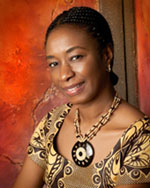
Chika Unigwe is an Afro-Belgian writer of Nigerian origin. She is the author of fiction, poetry, articles and educational material. Her second novel, On Black Sisters' Street, was published in Dutch in 2008 (as Fata Morgana) and in English in 2009. Night Dancer is her latest novel.