Saturday, 2 June 2012

Crown Troupe of Africa Celebrates 16 Years


On the first day in the month of June 1996 a group of young people came together. They met in the sitting room of a flat occupied by the mother of one of them in the house of foremost Nigerian musician King Sunny Ade. His son Adekunle Adegeye was one of them, and he went on to become the first choreographer of the repertory group. These young people shared one thing in common--passion for performance. They started Crown Troupe of Africa. Over the years, the group has metamorphosed into a socially conscious one, from entertainers to commentators. Located in Bariga, a place noted for (amongst others things) poor living standards, the group has continuously created a platform of expression through the arts for young people who otherwise might be tempted to channel their youthful energy to less auspicious vocations.

Crown Troupe has been selected to be part of Contacting The World, a biennial youth theatre festival organized by Contact Theatre, which is based in Manchester. They have been twinned with another UK Based Theatre Company, Boundless Productions, Manchester. There have been exchanges between the two companies, with a member of Crown Troupe visiting Boundless Productions in March and the visit reciprocated in April by Cat Dowling of Boundless Productions.

It's Crown Troupe's 16th year of creative engagements, and they plan to celebrate the anniversary with a mixed menu of performances at different locations in Lagos, culminating in a grand finale at the National Theatre on Friday 29 June 2012. There will also be a tour of some Nigerian universities (among them Obafemi Awolowo University, Ife and University of Ibadan) with two new creations, before the group heads off to the International Youth Theatre Festival at which they were selected and are slated to perform in Manchester.

Dates and venues the Crown Troupe 16th anniversary performances
  • June 8, The Life House, Sinari Daranijo, Victoria Island
  • June 10, Ember Creek, Awolowo Way, Ikoyi
  • June 29, National Arts Theatre, Orile Iganmu.
      (The Director and Choreographer of Crown Troupe, Segun Adefila, facilitated a drama workshop for children at GCLF 2011.)

      Binyavanga Wainaina's Memoir Launches in Nairobi

      A year after its release in the US and in the UK, Binyavanga Wainaina’s critically acclaimed memoir One Day I Will Write About This Place finally came home to Kenya, with a launch at Nairobi’s Railway Museum.

      “I hope that the beautiful cover of the Kenya version of the book will make up for the delay in launching it here at home,” Binyavanga said, and explained the grim situations that conspired against the original plan to launch the book in Kenya before its international debut. It was a combination of things—the Kenya shilling weakened against the US dollar, and then Binyavanga had a stroke, and then he lost his father just before the book came out.

      The Nairobi launch was a cosy, intimate affair. Bibliophiles and literature enthusiasts huddled together on tightly bound bundles of hay. Heads and feet bobbed to Just A Band’s DJ set of house, funk, disco, and all the pleasant noises in between. And in the background, rain pounded the rustic remains of locomotives that once, between the forties and seventies, plied East Africa.

      The Nairobi launch of the book coincided not only with Kenya’s Independence Day celebrations but also with Queen Elizabeth's Diamond Jubilee celebrations (coincidentally, it was while at Aberdare National Park in Kenya in 1952 that the Queen learnt of her father's death and her own forthcoming coronation).

      That the book is written in English is quite plainly attributable to Kenya’s colonial heritage. Perhaps, then, there is something to be said of the Railway Museum as a venue for the book launch, with its quaint locomotives both as symbols and as residues of colonialism. Or, perhaps, that is excessive reading between the lines?

      Following several brief introductory speeches, Kwani?’s Managing Editor and 2012 Caine Prize shortlisted writer Billy Kahora told anecdotes from years of working with Binyavanga at Kwani?, a literary magazine that Binyavanga founded upon his winning of the Caine Prize in 2002.

      Copyright Mwangi Kirubi

      Binyavanga held a short reading of his book, introducing the audience to his eclectic, breathing, twisting words, to the vibrancy and innocence and swirling colours of his childhood. It is a childhood that most of his Kenyan audience was familiar with, judging from the ease at which grins and chuckles broke. He read:
      Nakuru is a high-altitude town at the bottom of the Rift Valley. This geography-class contradiction confuses me. Ciru and I like to call Kenya’s tallest building Kenyatta Cornflakes Center.
      Brown is near. Green far. Blue farthest. The hills in the distance are dark. Maasailand.
      From here you can see Kenya’s main highway- the Mombasa-Kisumu Road, where there are often long, long lines of army tanks and trucks going to the Lanet barracks. Uganda is still falling. Idi Amin ran away. They killed all the prisoners and left blood and guts in the prison. Some bodies had no heads. Tanzania and Museveni attacked Amin. Mum is on the phone a lot with uncles and aunties. Most of them are now all over the world.
      President Moi says Kenya is an Island of Peace. President Moi says Somali Shifta bandits are trying to destabilize Kenya. Somali Shiftas don’t tuck in their shirts. The king of Rwanda is nearly seven feet tall and is always standing outside Nairobi Cinema, where women come and kneel in front of him. He is not allowed into Rwanda. He is a refugee. He used to flirt with Mum before she met and fell in love with Baba.
      After the reading, Binyavanga had a conversation with Granta’s Deputy Editor, Ellah Allfrey. The chat was frank, on wide-ranging topics such as childhood masturbation, death in the family, generational (and general) differences between East, West and South African writers, the manifestations of colonialism in literature, the machinations of the global publishing industry, the delicate balancing act between the need for candour and the risk of naked vulnerability in writing, what makes Binyavanga’s book a memoir and not an autobiography, and whether or not it was written as Africa’s answer to books such as No Mercy: A Journey Into the Heart of the Congo, Dark Star Safari and The Zanzibar Chest.

      Copyright Mwangi Kirubi
      Binyavanga recounted some of the bizarre and less bizarre events that brought him continental and international acclaim, the ensuing struggle to live up to and even scale his own past successes, and his plans for the future. He also revealed that a West African version of One Day I Will Write About This Place is forthcoming from Farafina Books.

      Eric Wainaina, perhaps the most recognisable, most socially conscious face in Kenyan music performed Joka, a song penned by writer Parselelo Kantai. And then, as though in self-fulfilling prophecy of the title of the song, long, winding queues snaked their way to the book-signing table.

      Claudette Oduor

      Friday, 1 June 2012

      The Return of Oprah’s Book Club


      Via NYT Media Coder:
      Oprah Winfrey, the publishing industry’s unrivaled tastemaker, will revive her popular book club next week after a two-year hiatus, promising the book business some of the sales and publicity it thought had vanished along with her weekday talk show.
      Read on. And you can become a member of Oprah's Book Club 2.0.

      Conversation with Akin Adesokan at The Life House

      For lovers of vintage literary discussions, Monday 28 May 2012 was D-day and 6:00 pm was H-hour. At about 5: 45 pm, people began trickling into the swanky atmosphere of The Life House, which was the venue of the CORA-organised “A Conversation with Prof. Akin Adesokan”.

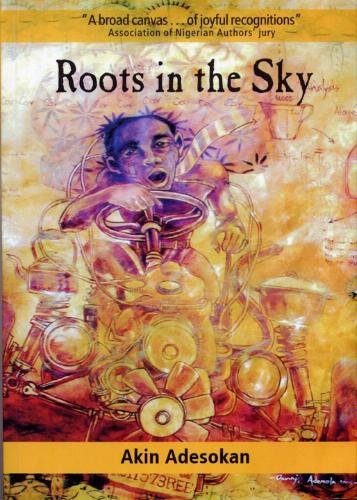
      It is germane at this point to give a brief biological sketch of the professor. Akin Adesokan worked for many years as a journalist with The Guardian (Nigeria), and then joined the formerly clandestine news magazine Tempo, for which he also wrote a weekly fiction column. His first novel, Roots in the Sky, won the Association of Nigerian Authors’ prize for fiction in manuscript form in 1996. Following his political detention by the junta of General Sani Abacha, he was awarded the PEN Freedom-to-Write Award in 1998 and the Hellman/Hammett Human Rights Award in 1999. Today, Akin Adesokan teaches Comparative Literature at Indiana University, Bloomington, Indiana.

      In solidarity with Akin Adesokan, present at The Life House on the day of his reading were many writers, journalists, theatre practitioners, and book lovers. Some of the faces I recognised are: Toyin Akinosho, Uzor Maxim Uzoatu, Toni Kan, Jumoke Verissimo, Victor Ehikhamenor, and Kunle Ajibade. Upon my arrival at The Life House I had met Deji Toye, who was the moderator of the event, reclining in a colourful sofa under the shade of a well-pruned tree, deep in conversation with A. Igoni Barrett, a writer.

      After a while, the small crowd that was gathered in the front yard of The Life House began to spread out, and then broke into three independent groups, as I can remember. Everyone was chatting heartily, shaking hands, roaring in laughter and engaging in warm embraces, the kind that reveals how long you have missed a friend. It was at this juncture it became apparent that the event had to begin.

      Mind you, the guest, Prof. Akin Adesokan, was among the early birds. Dressed in an orange long-sleeved shirt tucked into a pair of dark blue trousers, he had strolled in—a leather bag clutched in his right hand—in the company of his bosom friend and the publisher of his first book, Toyin Akinosho, who also doubles as the Secretary-general of CORA.

      Deji Toye (L) and Akin Adesokan
      When the moderator ushered Akin Adesokan to his seat—a flower-pattered armchair facing the curious audience—it was glaring that an air of electric anticipation pervaded the hall. As if to seduce us, the audience, the hall took on an aura of a rare literary faculty, an impact that I assumed was soon transferred to everyone present. (How I wish I am allowed to a bit of exaggeration here, but, alas, I am not!) The audience of a sudden seemed to possess, at the introduction of the special guest, a sombre and discerning ability, so much so that even a small wheezy cough at the back of the hall could be accorded some semiotic importance. Such was the situation and and a befitting welcome indeed for the man of the moment: Akin Adesokan.

      Of course, everyone at the venue was already familiar with the name, yet the formality of introduction was still needed, especially as the occasion was official, coupled with the fact that the audience was composed of Nigerians and non-Nigerians, men and women who were keen to listen to this celebrated writer. They might have known the name and the face that bore it via so many modern means—Facebook and suchlike; however, some strange faces around must have wanted an indepth history surrounding the ebullient, young professor.

      After the impactful introduction by Deji Toye, the stage was set. The next thing on the moderator’s agenda was to call upon Toyin Akinosho to read from the guest’s novel Roots in the Sky. As the event unfolded it became clear that emphasis wasn’t on Adesokan’s debut novel and that Mr Akinosho’s reading from that book was only meant to whet the appetite of the audience and probably to douse the conversational tension that had accompanied them from the open space outside right into the hall.

      Simply spellbinding is the only way to describe Akin Adesokan’s reading from his novel in progress entitled South of the Still River. He had remarked that his friend Toyin Akinosho often mocks him that his novel will “never be fit for picnics” nor likely to be taken for a pleasure read, but the effect of this unfinished novel on the audience proved otherwise. The language was superb, simple to understand, rife with native images that showed that, yes, this was an African writer at work.

      Notwithstanding that I didn't actually hear Adesokan read out any African idiom, the humour was potent enough to provoke outbursts of laughter at intervals. Before he commenced reading he had given the audience ample hint of the story-line. He said that the novel is an autobiography of an African writer, whose identity is a revelation of the true-life situation that some people do not belong to any country. Symbolically, the central character doesn't belong to a specific country: his only means of statehood is a UN passport. He is perpetually in exile but with an eagle eye fixed on the political and economic developments back home, in this instance the continent of Africa.

      The audience

      Adesokan noted that apart from this novel he is also working on a trilogy that attempts to deal squarely with Lagos life in ways ranging from a distinctive deployment of language as peculiar to the city, its environmental scenes, down to characterisation, etc. 

      When the floor was thrown open for questions, they came in a barrage because of the range of issues Adesokan had traversed in the course of his reading. Among the questions that were flung at him were these, paraphrased below:

      Give reasons why you are concerned with the past as a modern writer in a present-day Nigeria by delving into the 70’s in Roots in the Sky?

      Does Nollywood really embody the whole of the Nigerian film industry, especially as there are other film-making bodies—such as the makers of Yoruba and Hausa movies—that are not integrated into the Nollywood name?

      What spurs your writing—is it your academic achievement as a professor of comparative literature or is it your sheer love and talent for writing?

      The question I found most fascinating came from a mature audience member who observed from the progression of Adesokan’s reading that there had been a change in the viewpoint of the brain behind the writing. While noting this morph, he questioned what could be responsible for such.

      "In responding to the issue of delving into the past to feed a present society, he argued that without the past there can never be the present and that the burdens the present bears are the negligence of the past whose scars still haunt us into the mire we find ourselves today."

      In reactions to these questions and others, Adesokan dexterously tackled each with a finesse that left everyone satisfied. In responding to the issue of delving into the past to feed a present society, he argued that without the past there can never be the present and that the burdens the present bears are the negligence of the past whose scars still haunt us into the mire we find ourselves today. He added that if such problems that forged our background are not addressed, we are bound to repeat same injurious errors. He also gave plausible points on why we must accept that Nollywood, irrespective of its shortcomings, has made commendable progress. He disagreed that he got into writing on the basis of his academic feats, citing examples from his career in the 90s as a lover of literature even when he had no such academic qualifications. In answer to the question that there is a change of outlook evident in his writing, he answered in the affirmative, saying that of course there were slight changes as his experiences over the years had increased with maturity and exposure to new ideas and experiences in a turbulent, fast-moving world, and all these had no doubt redefined his perspective. Thus he concluded.


      Samuel Osaze works with Committee for Relevant Art as a Programme Officer.

      Chimamanda Adichie at Calabash Lit Fest in Jamaica

      Photo by Andre Bagoo

      The Calabash International Literary Festival returned after a one-year break to offer a full feast of readings, conversations and discussions about writing, and music from May 25 to 27 at its customary location, Jakes in Treasure Beach, Jamaica. Although located in a remote village, the festival, which scheduled a mix of local and international talent, is the most popular event of its kind in Jamaica, pulling an attendance of thousands over the three days. The organisers—led by film producer Justine Henzell and poet and lecturer Kwame Dawes—had as the theme “Jubilation”, in recognition of Jamaica's 50th anniversary of political independence.

      The opening evening, Friday, slated Nigerian writer, Chimamanda Ngozi Adichie and New York City native, Victor Lavalle, under the banner “Two the Hard Way”. Although the organisers usually stay away from naming headliners, Ms Adichie was the pulling card for the hundreds who made her presentation their main event. Adichie's two novels, Purple Hibiscus and Half of a Yellow Sun, are well known to recreational readers in Jamaica, so her audience was excited to see her and they showed her love from the moment she touched the stage. She, in turn, seemed to sense the good vibe and executed a flawless delivery.

      Her appearance in her trademark cosmopolitan styling went down well with the crowd which was made up mostly of professionals, academics, corporate executives and practitioners in the creative industries.

      Photo by Andre Bagoo
      Not all writers are captivating readers, but Ms Adichie had the full package. Adichie selected to read material about her own life and family in Nigeria and her natural voice has warm tones which carry her own words calmly, with conviction and with beauty. Perhaps unknown to her, she is a package that is already known to us—and beloved by us—the flowering of the daughter of a leading academic, exposed from a young age to good writing, informed discussions about ideas, and also passionately patriotic about her country.

      Adichie’s first reading was recollections of the university campus house where she was raised, and which had been previously lived in by Nigerian writer, Chinua Achebe—one of her writing influences. She presents the home as a quiet place for reflections, dreams and a place to return to and feel rooted in. It is also where she started her first writing projects.

      Achebe is the African writer that most Jamaican readers would know. He spoke a few years ago at the University of the West Indies, Mona, and many at the festival would have attended that event. For those in the audience who had the memory of his reading informing their senses as they listened to her, the dual experience would have seemed satisfying and meaningful.

      May is a rainy month in Jamaica, even in the water-parched region of Treasure Beach, but it did not rain this year. Somehow, mosquitos find a way to survive and they bit into Adichie as she started her second selection. A volunteer lady-in-waiting, clad in unadorned white linen, wafted out of the audience and generously misted Adichie with repellent. She graciously acknowledged the pampering and flowed into the second reading.

      Recollecting her Uncle Mai was a much more intimate reading. Adichie opened up on her personal experience of losing a loved one—a beloved uncle who died recently from a chronic disease. As writer, Adichie expertly handled bearing witness to the ongoing deterioration of someone who was close to her; and the inevitable committal of the body. Her words were clear, calm, accepting of what the family had to face, especially with his decision to limit his options for treatment.


      Adichie became known to many in Jamaica through a speech that she delivered with thoughts on The Danger of a Single Story. That video went viral because of how she delivered that oft-lamented petulance that stories outside of the interest of major media outlets are not told. One listener said it was "revolutionary" because she was able to use her platform of fame to further the message with a clear, calm and beautiful delivery. Adichie packed those characteristics into her reading in Treasure Beach and at some time in the future she will know that Jamaicans reward that respect of audience with long memories of affection.

      Gwyneth Harold is a writer in Jamaica. Her book for young adults Bad Girls in School was published by Harcourt and is a part of the Caribbean Writers Series. She is currently working on another novel.

      Thursday, 31 May 2012

      Favourite Five: Deborah Ahenkorah

      To start off the month of June we bring you Favourite Five by Deborah Ahenkorah. Deborah is the Executive Director of The Golden Baobab Prize, an annual literary prize aimed at inspiring African Children's Literature. Her interview will be up on the blog next week.

      She had this to say about her choices: "I read a lot of British and American literature. So the Enid Blytons of course, the Sweet Valley series, the Babysitters Club, Nancy Drew, Hardy Boys, etc. I also got into the Harlequins and Mills and Boons at some point, but let’s not talk about those, ahem. There was also a time when I loved short stories. My school library had a whole bunch of American literature readers with all these wonderful short stories that I could never get enough of. The result of all these books I read was that I always dreamed up fanciful ideas that were not particularly culturally appropriate. For instance, one time I tried to start a babysitters club, but abeg who was hiring? Or the time I was determined my life’s calling was to be an amateur detective in Accra. When I told my dad he laughed and said, “Eyah, my daughter wants to be a policewoman!”


      Artists Grants at 30 Nigeria House

      Theatre Royal Stratford East in partnership with New World Nigeria presents 30 Nigeria House.

      30 Nigeria House is part of the London 2012 Festival,the spectacular 12-week nationwide celebration running from 21 June until 9 September 2012 bringing together leading artists from across the world with the very best from the UK.

      Throughout the London 2012 Olympic and Paralympic Games, Theatre Royal Stratford East will be celebrating the diversity of Nigerian culture.

      Now, Theatre Royal Stratford East announces an exciting opportunity for new, emerging and existing UK-based artists of Nigerian descent and artists residing in Nigeria.

      This new project, 30 Nigeria House, aims to assist 30 artists in developing a new piece of work through an award of £3,000 each. The chosen 30 will attend the launch of the Nigeria Hospitality House (Nigeria House) for the London 2012 Olympic Games and 8 of these artists will participate in an event to share their work as part of Nigeria House, which is located at the theatre in August.

      For more information visit 30 Nigeria House or send an email to info@30nigeriahouse.com.